
The Wardrobe Reset No One Talks About
The Wardrobe Reset. Happy New Year!
I am excited to start the new year with you and help you navigate the minefield that is our personal style.
Maybe you set intentions / goals / resolutions, or maybe you don’t. But regardless, I’m sure you’ve had conversations with yourself (or with others) about the changes you want to make this year.
Typical New Year goals / intentions / resolutions sound like this:
spend less, buy better, spend less time getting dressed, enjoy your wardrobe more, feel more freedom, have a quieter mind, more energy and efficiency, more balance.
Getting to a place of satisfaction with your wardrobe takes time and dedication… and that’s usually where it all goes wrong.
You start the year optimistically, then slip back into old habits because they’re routine, second nature and—let’s be honest—easier.
The goal or intention isn’t enough.
We need habit-changing actions.
Establishing new habits is better than setting goals, because essentially it’s the habit that gets you to the goal, no?
Jim Ryun was the first high-school athlete in the US to run a sub-4-minute mile. He was dedicated—and I love his quote:
“Motivation is what gets you started. Habit is what keeps you going.”
Dressing well often starts with motivation (a new role, a lifestyle shift, a confidence or wellbeing goal).
Real change comes from repeatable systems:
buying less, choosing better, dressing intentionally.
So don’t set wardrobe goals. Instead, doing these three things will move you forward—because moving forward is hopeful.
The Wardrobe Reset
1. Write everything down
(purchases, cravings, observations)
Buy a diary or notebook. A really nice one. It will motivate you.
Benefits
- Creates awareness of real shopping habits and emotional triggers
- Builds a pause between desire and buying (use the wishlist function)
- Reveals patterns—like buying in multiples—that guide better future choices
2. Photograph your outfit every day
Yes—even if it’s sweatpants.
Benefits
- Shows what you actually wear, not what you imagine you wear
- Builds confidence through visual evidence
- Identifies repeatable outfit formulas that work
3. Track wear
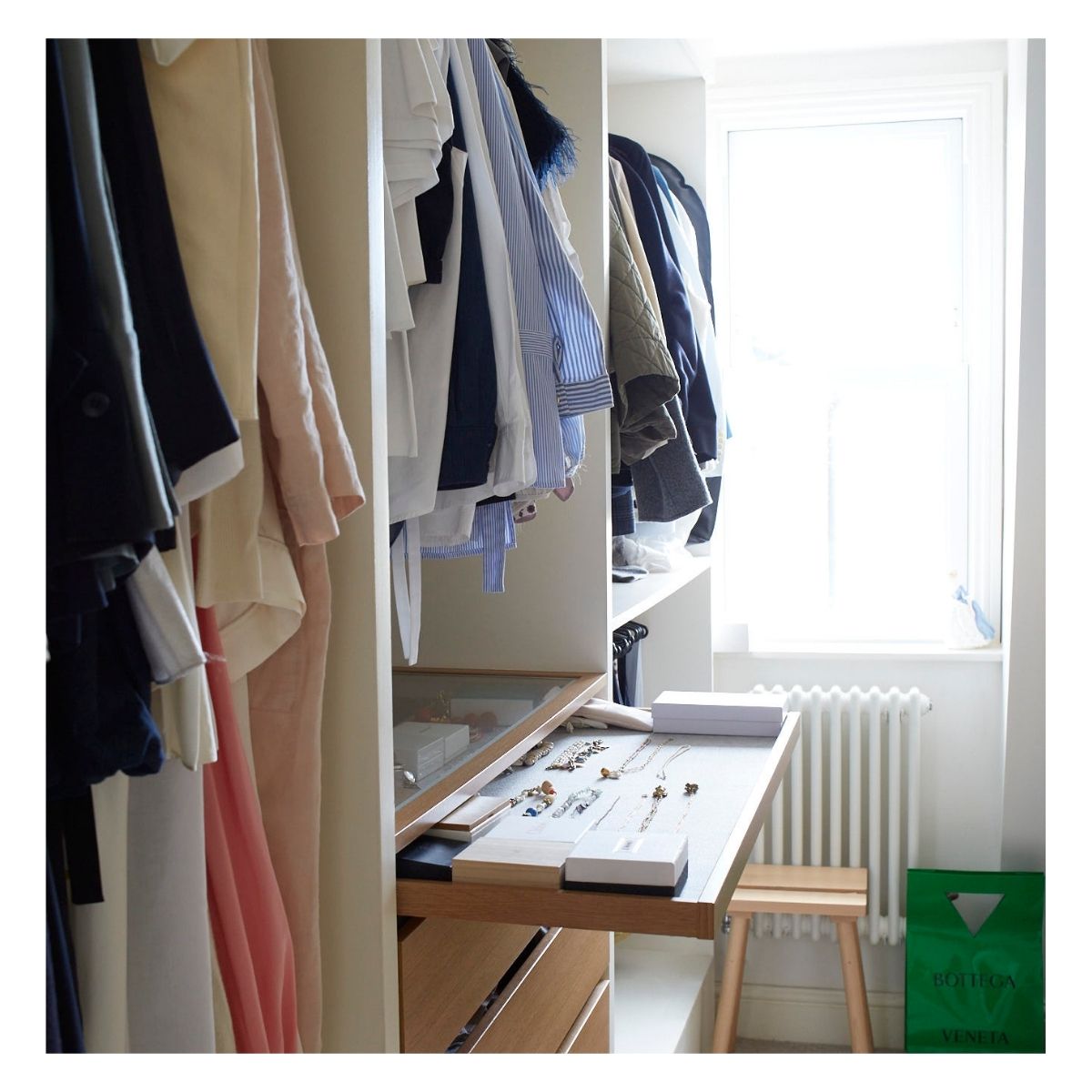
Use rubber bands on hangers (add one every time you wear an item) and track drawer wear by fold direction (label side up → label side down once worn).
Benefits
- Makes wear patterns instantly visible
- Highlights true wardrobe favourites and underused items
- Supports confident decisions about keeping, replacing, or buying less
This kick-starts the journey of getting to know yourself and what you really wear.
Evidence replaces emotion.
What you wear every day is your style—not the amazing dress you wear to events, but what you put on your body every single day.
Style is a practice.
And the more you practice, the better you become.
Practice is intentional. It’s not absent-minded. You want to get better at something, so intention has to be there.
To help you, I’ve created a clear, calm 30-day wardrobe reset framework. You will find it below. Use your beautiful new note book to write quick observations.
Let me know in a month how you got on.
Penny
P.S. I know a lot of you want to amp up your beauty routine at this time of year, so I’m SO excited to offer you 10% off the incredible ZiiP Halo dual-wave facial tool. It was recommended to me by a friend who I genuinely thought had done something medical to her face—and it’s Jennifer Aniston’s go-to. You can thank me later.
Shop here using code PENNY.
P.P.S. If all of the above resonates with you but you want to fast-track to wardrobe satisfaction, we can get you there.
Get in touch here.
The 30-Day Wardrobe Reset
A practice in observation, not optimisation (yet).
What you’ll need (Day 0)
- One beautiful notebook (this matters)
- Your phone (for outfit photos)
- A bag of rubber bands
- Five minutes a day
Principle: We are not trying to change anything yet.
We are collecting evidence.
Days 1–7: Awareness Week
Seeing what’s already happening
Daily actions
- Photograph your outfit
- Wear clothes as normal
- Add a rubber band to the hanger each time you wear something
- For drawer items: return folded label-side down after wear
- Write in your notebook:
- What you wore
- Any craving, purchase urge, or observation
Benefits being built
- Interrupts autopilot dressing
- Creates a baseline of behaviour
- Removes judgement (“good/bad outfits”)
- Builds consistency without effort
End-of-week reflection (10 minutes)
Ask:
- What did I wear more than I expected?
- What didn’t get touched at all?
- When did cravings show up?
No action yet. Just notice.
Days 8–14: Pattern Week
Connecting behaviour to reality
Daily actions
Continue all three practices.
New focus
- Look for repetition
- Colours
- Shapes
- Comfort levels
- Situations (work, weekends, evenings)
- Notice how cravings compare to what you actually wear
End-of-week reflection
- Which outfits made me feel most like myself?
- What items are quietly doing the most work?
- What am I craving that doesn’t appear in my outfits?
This week often reduces shopping naturally.
Days 15–21: Contrast Week
Reality vs fantasy
Daily actions
Continue as before.
New focus
- Pay attention to non-wear
- Items with no rubber bands
- Drawer items still label-side up
- Notice any guilt or stories attached to them
Notebook prompts
- Why do I own this?
- What version of me is it for?
- Does it support my real life?
End-of-week reflection
- What feels aligned?
- What feels performative?
- What am I keeping “just in case”?
No decluttering required — clarity comes first.
Days 22–28: Insight Week
Letting the wardrobe speak
Daily actions
Keep going — by now this should feel light and automatic.
New focus
- Notice cost-per-wear evidence
- Notice emotional favourites vs practical workhorses
- Notice where confidence comes from
Notebook prompts
- If I could duplicate three items, what would they be?
- What do my most-worn items have in common?
- What doesn’t earn its space?
Days 29–30: Reset & Reframe
Turning observation into intention
Day 29: Review
- Look through:
- Outfit photos
- Rubber band distribution
- Drawer orientation
- Notebook notes
Identify:
- Top 5 most worn items
- 3 clear patterns
- 3 misalignments, items that aren’t you anymore and don’t represent you.
Day 30: Reframe
- Write a short personal summary:
- “My wardrobe works best when…”
- “I feel most confident in…”
- “I no longer need to buy…”
Optional next steps (only if needed):
- Repair or upgrade high-rotation items – write a targeted shopping list.
- Let go of items that are working hard for you.
- Set a future shopping filter based on evidence



![The [Unlikely] Shoe Hero](https://penny-bennett.com/wp-content/uploads/2023/07/The-Unlikely-Shoe-Hero.jpg)


![What to wear with jeans [that doesn't feel predictable]](https://penny-bennett.com/wp-content/uploads/2020/11/What-to-wear-with-jeans-that-doesnt-feel-predictable.jpg)
![How to arrange your wardrobe [and stay positive] during lockdown 2.0](https://penny-bennett.com/wp-content/uploads/2020/11/How-to-arrange-your-wardrobe.jpg)
![2 New And Fun Ways To Layer [And It's Not A Polo Neck]](https://penny-bennett.com/wp-content/uploads/2020/11/2-New-And-Fun-Ways-To-Layer-And-Its-Not-A-Polo-Neck.jpg)


